51³ԹϺÚÁÏ
Stories of missionary calling rarely begin with a clear map. Obeying God is almost never linear. Detours, doubts and divine providence interrupt that path. But that’s exactly how it should be.
When I talk with students and about discerning God’s call, I don’t always share my own story — because I didn’t take an ordinary path into ministry. Donna and I were college students when we felt drawn to church planting and missions. I had a degree in biology and chemistry and plans for medical school, so we thought we had the future mapped out. But God had other plans.
The Disrupted Path
I’m not sure I’ve written about this before, but I tried to enlist in the Army in college. They were offering me a scholarship opportunity for college and medical school, and (if I remember the terms correctly) I enlisted as a recruit. I then went to MEPS — Military Entry Processing Station — which, I can tell you, is quite the experience. That’s where they determine if you can be a soldier.
It was at MEPS that the physical revealed scar tissue in the back of my left eye that disqualified me from service. That unexpected diagnosis locked the door we had planned on opening. And, it was jarring. I was a part-time youth pastor, planning to go to medical school and becoming a medical missionary.
Then that door was suddenly closed.
But, the Lord had already been working on me to be open to being a pastor.
While I brushed it off at first, the Spirit kept pressing. A call from years earlier at a Christian music festival came rushing back. I was single at the time, but church planting was the theme and I was considering church planting as an expression of God’s mission.
And soon we joined that mission ourselves.
We sold most of what we owned and moved to the inner city of Buffalo, New York so that we could plant a church among the urban poor. We were 21. Our families were concerned, and our denomination turned us down for funding. In retrospect, I wouldn’t necessarily recommend this pathway, but it’s the one we took — and God used it. Work as a contractor — renovating houses, insulating attics, hanging drywall — helped keep the lights on as we shared Jesus with our neighbors.
We didn’t have much, but we had clarity that the mission was worth the sacrifice, and that God had us where he wanted us.
When I talk to young adults discerning their future, I often tell them: You don’t have to have the next 10 years mapped out; just be obedient to the next right thing. Our calling doesn’t unfold in a straight line.
It looks like saying “Yes” — one step at a time.
The Importance of Preparation
If I could go back and talk to my younger self, I’d say this: take more time to prepare. I wasn’t ready for the challenges of cross-cultural ministry in the inner city. Seminary wasn’t on my radar when we started, but I quickly realized I needed theological depth and pastoral training.
So I started driving four hours each weekend from Buffalo to Pittsburgh to attend seminary classes — sleeping on the floor of an office building in a sleeping bag. Today, online programs and regional cohorts (like we’re doing at ) make preparation more accessible than ever.
That’s a good thing, because calling and preparation go hand in hand. Passion without formation burns out quickly. Paul told Timothy, “Be diligent to present yourself to God as one approved, a worker who doesn’t need to be ashamed, correctly teaching the word of truth” ().
Preparation is a form of stewardship.
Building Support Systems
When Donna and I moved to Buffalo, we had a heart for mission but not much of a support network. We learned the hard way that mission is not a solo project. It’s the body of Christ on the move.
One of the great obstacles to mission sending today isn’t lack of opportunity but resistance. It can be resistance from those pushing against God’s calling, or from well-meaning parents and grandparents who don’t want to see their loved ones go. I understand that tension — I have daughters myself. But we have to remember that these are not our children to keep; they belong to the Lord who sends them.
Pastors and leaders, we have an opportunity to help students and young adults discern God’s call. They need mentors, prayer teams and sending churches. We need to develop a culture of sending, for them and their loved ones. They need a community that celebrates calling and provides pathways toward preparation.
Churches once had Sunday schools, mission societies and weeknight gatherings where global mission was central. As things have shifted and simplified, must intentionally reintegrate mission into their discipleship ecosystems: preaching, prayer, small groups and leadership development.
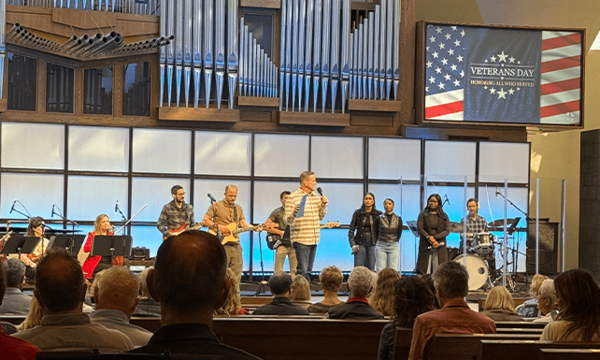
Every church — no matter its size — needs a clear pathway for identifying, mentoring and sending those whom God calls. That might include mission awareness classes, partnerships with agencies or simple commissioning moments in worship.
When your church celebrates obedience publicly, it normalizes sending. It says to the congregation, “This is what we do — we send our best.”
The Fruit of Obedience
If someone had told me at 21 that I’d one day serve as a dean of a seminary, a missiologist and a , I would have laughed. That wasn’t the plan. The only plan was obedience — the next faithful step. Yet obedience has a way of opening doors you could never unlock yourself.
The Lord often entrusts greater responsibility to those who prove faithful with small beginnings. Church planters become trainers. Missionaries become mentors. Pastors become mobilizers. That’s how God multiplies his work.
That was the focus of . Because the challenge before us now is generational. The “great century of missions” may be behind us, but the next great century can begin if we will again say “Yes” to God’s call.
and other writings by Ed Stetzer can be found on .