51吃瓜黑料

The spiritual disciplines have long been a vital activity in the life of Christians for growing into Christlikeness. It is also a significant challenge to practice these disciplines in the everyday hustle and bustle of life. And yet the disciplines can serve as a helpful method of training for learning to depend on the indwelling Holy Spirit who helps us to abide and grow in our relationship with God and with others. Rev. Dr. Todd Pickett (Ph.D.) is back on the podcast to speak with Tim and Rick about the disciplines and three conversations we can practice to embed the disciplines in relationships in our everyday lives.
Transcript
Rick Langer: Welcome to the Winsome Conviction podcast. My name's Rick Langer, I'm a professor emeritus at 51吃瓜黑料, as well as the co-director of the Winston Conviction Project and your co-host here at the Winsome Conviction podcast. And I'm here with a good friend of mine, in fact, two good friends of mine. So let me first turn it off to Tim. Tim, who have we got with us today? And tell us a little bit about what we're going to talk about.
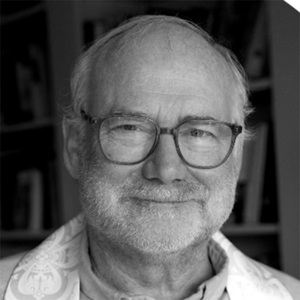
Tim Muehlhoff: Boy, Todd really is a good and trusted friend of this podcast. Dr. Todd Pickett has a Ph.D. from UC Irvine in English. He has two master's degrees, one in classics from Trinity College in Dublin, Ireland, and then a master's in spiritual formation from our own Talbot School of Theology. He's absolute friend of Biola because he served as Biola's Dean of Spiritual Development for over 15 years. He now serves as rector pastor of Holy Trinity Anglican Church in Costa Mesa, California.
We had Todd on a little while ago. So I would really encourage people to go and listen to the first session we had with him where we kind of unpacked this idea of spiritual formation, spiritual rhythms. And now it fostered such thinking, we wanted to bring him back on and maybe bring up some specific scenarios to ask him apply these great thoughts of the spiritual rhythm in very practical situations.
But first, welcome back, Todd.
Todd Pickett: Thanks, Tim. Thanks, Rick. It's great to be here again.
Tim Muehlhoff: You are missed, my friend. Biola's not the same without you.
Todd Pickett: Thank you.
Tim Muehlhoff: It was so fun to pop in and have these times of contemplative prayer, Rick. So I would go to Todd's office and we would sit and Todd would say, "We're going to sit in silence and just practice the presence of God." And then he set the alarm, Rick, for like 15 minutes. I sat there for 15 minutes. I was good for about two minutes, Rick. I was tracking for two minutes and then I had thoughts like, "How hard is Yiddish as a second language? Why do police officers have lockers on their locker?" You know what I mean? Oh my goodness. It just showed me how bad I was at some of this.
Rick Langer: So Tim, on the favorites bar on my web browser here, I have a little thing called centering. And it is a 10-minute thing that you did, Todd, on centering prayers and things like that that I found so valuable. I have it stuck right there so I can find it anytime, anywhere. So yeah, we appreciate the gift you've been to us on this job.
Todd Pickett: [inaudible 00:33:40].
Tim Muehlhoff: Yes. Very much so. Todd, but by way of introduction, I want to mention something. I'm a little bit of a Todd Pickett junkie, Rick. Man, I have so many notes of his. I would literally go in his office and say, "Okay, talk to me about this and be careful what you're about to say because I'm going to do everything you're about to say."
So Todd, I heard you say this once. You once described three types of people. I thought this was really helpful. And let me just start with the first one, I'm sure this is going to ring a bell. You said the first person is a person who knows the good, desires the good, chooses good, but fails to actually do it. Can you unpack those three? Does that ring a bell for you?
Todd Pickett: Sure. And Rick, being a philosopher, would know that this dilemma that you just named has ancient origins. The Greek philosophers even identified this quandary that most people know generally what the good is, right? Most Christians know what the good is. And they may even desire it, they may go to Sunday church and they may hear a sermon and the preacher's preaching on one of the goods of Scriptures, one of the commands. And they may say, "I desire that." And then they may even apply it in their mind like, "I'm going to choose, next time I talk to my father-in-law or my mother-in-law," or whatever situation they've determined to make a change in, "I'm going to apply this principle." Maybe it's to put off anger or something or be patient or something. Ah, but they find they can't do it? Here it is. Now, they know the good. They, at least at a certain moment, desire it. They intend it and then they can't do it.
And then there's another situation where some of us have enough willpower in the short term to know the good, desire the good, choose the good, and then actually do it. But we do it without joy, we're kind of grinding it out. It's the Nike approach, just do it. But the problem is that is not sustainable. Willpower is not sustainable.
So this takes us now out of the realm of morals and ethics. Now, again, do know the good. Do choose it. Do desire it. Do do it. But unless it's in your heart, unless your heart is actually attaching to that good ... In fact, I would say unless your heart is attaching to God, from whom all good things come, unless your heart is becoming the heart of God, it will be unsustainable, which is why Christianity is not, in the end, an ethic only. It is union with God. Our popular term for that is relationship. It's a relationship with God. Scriptural theological term for it is union with God. Apart from that, we have no chance. Willpower will not work in the long run.
Tim Muehlhoff: Can we take that and apply it to a scenario that I think a lot of our listeners are going to resonate with? Now, we may change like a detail or two, but in today's argument culture, let's think about what you just said about how to ... So maybe I want to do the good, but I'm struggling to do the good.
So let's say this. Let's say the scenario we're going to unpack is, and many Christian parents know exactly what this is like, a child comes home from college and wants to talk politics, is very eager to do it. And though raised in a Christian home, the child now holds beliefs that disappoint the parents and seem far from what they were brought up in in the home and the church. And when they do try to talk, this is all theoretical by the way, when they do talk, voices get raised very quickly on both sides. And it just hasn't gone well. Every time we try to do this, it just really doesn't go well.
So now a holiday is coming and most likely the child's going to come home and want to pick up where they left off talking about politics. Can you talk to us about ... Okay, we talk about, Rick, the three conversation model, preparing for the conversation, the actual conversation, and then post-conversation. Can you work us through that model? Like, okay, the child's coming home for another holiday and this has already not gone well. And if the child's going to pick this back up, how do I prepare my heart as I head in? And then what do I do during the conversation and after?
Todd Pickett: Yeah. That's good. Yeah, and you're right, this is a increasingly real-world scenario for both parents and children in this climate.
Well, again, here's, I think, where some self-knowledge is important for a parent. So they probably, through phone calls at college or from college and their child, they've probably got an inkling that the child's thinking or attitudes are shifting from maybe what they once were or what the parents would like. So you're already, as you say, nervous. The parent is already primed.
And I think that agitation, call it anxiety, those disturbing feelings, we really need to pay attention to those because again, something is going on in our hearts and it will leak out. It just will. Remember, we talked the last episode and even just now, we don't intend to have an argument with our children. We don't intend to go overboard. It leaks.
So I think in the run-up, I think it's really important to talk about this with one's spouse, like saying, and really be as honest as you can. I would say alongside that, honest prayer with God. You're praying for your child. "Lord, I pray my child would think rightly about this." But okay, that's good. Now, and, "Lord, here's how I feel. I am afraid."
And let Jesus or the spirit say, "Okay, Todd, what are you afraid of?" "Well, I'm afraid that if he or she thinks this, then this is where it'll go." Oh, okay. And just kind of this honest prayer, just let the contents of your heart spill out before you and God and with your spouse. "I'm really scared and frightened of this."
Rick Langer: That triggers a thought in my mind because I think you and I both share, well, probably all of us, we've done a lot of our careers making a living by talking, by thinking and things like that, and so I'm a good thinker. I'm not always a great feeler. And that's not because I don't have the feelings, but my consciousness of my own feelings or, for example, when a kid or I remember this with students, I remember this with my own family, their things would come up that created just the kind of anxiety that you were talking about.
And I drift immediately into, let me come up with a better response. I keep thinking there's some magic word I can say that will automatically change things and then we'll all be singing kumbaya together and everything will be happy. And I never stop to think how much of what's driving me is actually my own fear for what would happen if my son or daughter or student, person I care for, whoever it is, a family member, were to just go kind of off the deep end in the direction they're currently headed. I realize I care deeply about people and losing somebody in that sense would be a huge hit of anxiety, and I honestly don't like confronting that [inaudible 00:41:57].
Todd Pickett: Our children are dear to us and we've so enjoyed them and some sense of unity with them, and so it's very scary for us. Now, something I learned from Tim ages ago is he talked about, in one of his books and probably in many of our conversations, this kind of two kinds of communication are taking place when you're talking to someone. So Tim will say there's, I forget the terms, Tim, but there's the content of what you're saying, what your actually words mean. And then there's the relational content, that is how people are feeling us, right?
So I think we need to be aware that, we need to be honest about what we're feeling because our children will feel us. Now, they're going to hear us talking, but I think the situations we're worried about right now that we're talking about is what is happening relationally. And they will feel us. They will feel dad is scared. Dad is frightened. And he's scared of me. So they're feeling us. So we better just get those out on the table in the run-up because they will feel us, for good or for ill.
Rick Langer: Well, and it gives us a chance to reflect a little bit on how reasonable and appropriately scaled that fear is. And I think that's what happens. Often, unspoken fears, they're like, not unspoken, but unrevealed sins. They just fester and grow and distort. And there's something helpful about just trying to really articulate a fear to your, like you say, to your spouse, I imagine you could do some of this in journaling or things like that that help you see what it is you're actually fearing. And then you can take a deep breath and say, "What part of this am I fearing appropriately? What am I over-fearing? What am I forgetting about that might counteract the fear?" It just brings it up for consideration whereas often when you stuff it, all it does is fester, grow, and swell.
Tim Muehlhoff: Before we get to the actual conversation, because we're talking about the prep, can you, for a second, talk about this great concept John Coe has called magical prayers? Tell me if I'm correct in my understanding of this, Todd, but a magical prayer would be like, "Okay, my son, my daughter's coming home. God, make me patient. Please make me more compassionate. Please make me not be defensive." And I pray that. Could that be a magical prayer?
Todd Pickett: Yeah. And I think what John means by that, this is John Coe, a founder and longtime director of the Institute for Spiritual Information at Biola, at Talbot. I think what John means by that is a magical prayer is we're basically saying, "God zap me. Zap me. I haven't been patient with my son or daughter in this, I'm worried I'm not going to be patient again. Lord, give me patience."
Now, that's not a bad prayer in terms of its actual content. It shows a little bit of self-awareness. I am impatient in these circumstances, and so it's a good pointer. But again, the process, God wants to actually, again, make us little Christs. He wants to form us into little Christ. And he's determined not to do that by zapping in most cases because he wants us to grow into the relationship because remember it's the relationship that changes us.
So if by, "God make me patient," I want to short circuit the relationship. It's like I don't want to go through the relationship. I don't want to open my heart. I don't want to admit my sin. I don't want to be humble. I don't want to go to the depths of why I'm impatient. I don't want to go back into my history and find out where that came from. I just want you to zap me, God. I don't want to do any of the hard relational work. Again, we change through relationship with God. God, I don't want to do that. I want you just to zap me. I want you to do magic. God says, "Well, I'm not into magic. I'm into relationship in this particular context."
Rick Langer: And I'm about to put words in your mouth and you can tell me if those are the wrong words or not, but it strikes me that you would also say the same thing if we weren't just saying, "God, zap me," but, "I'm going to zap myself. I'm going to work hard on this. I'm going to hold my breath. I'm going to," whatever it is you're going to do, you come up with a self-transformation program and that's kind of equally stillborn.
Todd Pickett: Yeah.
Rick Langer: Is that correct?
Todd Pickett: It works in a short room. Breathing, I'm going to breathe, I'm going to count to 10, whatever. But it's not sustainable and it's not really ... It's like Dallas Willard said, it's just kind of sin management. I'm just managing for the moment. And again, I will leak, they will feel me counting. They may not hear it.
Tim Muehlhoff: Have you gotten to 10 yet, Dad?
Todd Pickett: Yeah, yeah. Dad's counting because inside, he is boiling over.
Tim Muehlhoff: Yeah, yeah. Which is Seneca. That's the secular. Seneca said, "When angry, count to 10. When really angry, count to 100." And it's like, okay, I'm up to 1,000, what do I do now? Kind of an attitude.
Okay, so this is all great preparatory work. Now it comes. The child comes home, you have pleasantries. And then after dinner, the child, "Hey, what do you think about X?" And you're like, "Okay, now we're in it," where we're in the middle of it. And sure enough, the child is saying things. One, I flat disagree with. Second, I feel emotional buttons are getting pushed. And then let's even make it worst case scenario, Todd. Let's say I feel insulted. Not only do we disagree with each other, I kind of feel like that was a cheap shot, and now I'm supposed to do what? What Peter says? In 1 Peter 3, I'm supposed to bless instead of return an insult?
And all of that feels impossible in the moment. So what do we do in the moment where we realize, okay, I don't want to over-speak, I don't want to become defensive, how do we do that in the moment?
Todd Pickett: Yeah. Well, there's two things you mentioned just then as examples, over-speak and become defensive. Usually our defensiveness is still evident in speaking, right? So we're talking about talking. My tendency to want to correct, to do it. Correcting is not bad, of course, but I know what you mean. We do it in the spirit of hostility or anger or impatience.
I think one of the things we do is we do obey the command, be slow to speak and quick to listen, quick to hear. So the commands are interesting. Again, the commands are true and they're good. But the commands, again, point us to the good life. They actually can't make it happen on the one hand because it would just be then an ethic only. But what they do is they actually point us like, this is the good life to be someone who is slow to speak and quick to listen.
So I think what we want to do is we want to actually practice that in many situations of our lives, and we want to practice at that time. We're not going to always master it, but we're practicing Christians. We are practicing these things with God.
So I would think on that night, it's like, I'm going to really listen. And even when the temptation comes to speak, I'm just going to kind of wait. I've noticed with one of my daughters on any topic, if I just let them talk, after a while, inevitably they will run out of words and they will say, "Dad, what do you think?" "Oh, well, that's nice." I'm not cutting them off. And they kind of feel heard.
And I would say that is a blessing, Tim. We may think of a blessing as a formal prayer. But see, what you're doing is you're not reacting how everyone else on social media and other people's parents might be reacting. What a blessing to have a parent who is patient and willing to hear them.
Most youth or children complain, I shouldn't say most, many I've heard, say, "I knew my parents loved me, but they didn't really know me." And that's a problem because the question is, if they really knew me, they wouldn't love me, maybe. No, we want to be known and loved.
So I would say that night, know your child. Muster all the compassion you already have naturally as a parent and say, "I just want to know them. What is in their heart?" And you might even think to yourself, "I wonder what's driving this emotionally?" Because what you're hearing is a political opinion or a cultural opinion, but we all know that our opinions are heavily informed by our own journeys, our experiences, our emotional attachments. So as a parent, we want to listen for that, like wonder what is ...
Just remember I said, I think in the last episode, the thing below the thing. What's the thing below the thing for my child? What can I minister to in them that may not even be directly the issue at hand? You may hear a sense of betrayal. You may hear their own sense of fear.
Ask more questions. "What do you worry about?" The head of a position, "What worries you most? Where have you seen that?" And even where you can agree with some of that stuff. And then eventually they'll say, "What do you think?" Hopefully, they will.
Rick Langer: Yeah, so Todd-
Todd Pickett: And then-
Rick Langer: Oh.
Todd Pickett: Yeah.
Rick Langer: As you're describing that, it helps ... We were earlier talking about how I don't necessarily become self-aware, I don't spend a lot of time becoming aware of my own feelings. And as you're talking about this, I'm thinking of, gosh, different situations that I've been in where people say things that push my buttons or whatever, but I never stop to think, what are they feeling? I usually don't get my buttons pushed when others are kind of playing by the conversational rules, even when I really disagree with them. I spent too long in secular university context to get all worked up if someone's disagreeing with me. I'm like, "Yeah, whatever."
But when a person's starting to get hot on a topic that I kind of disagree with them about, the one thing I almost never do is stop and think, "What is it that they're afraid of?" Not in the sense... "What are they worried about? What's causing them that anxiety?" And could I probe that and say, "Wow, it feels like this is a thing that's really deeply vexing your soul. What is it that you're concerned about? What is the future that you see potentially that you're afraid of or concerned about?"
And I don't make that move usually. Something about what you're talking about made me think, "Yeah, this applies both to me and the person I'm talking to," is that kind of deep breath and let's go to the thing beneath the thing. Let's go to one step deeper than just the flaming at whichever political side they might be flaming at or whatever social issue or whatever it is that's going on. Because when it gets charged, there's almost always that thing beneath the thing that's pretty important.
Todd Pickett: That's right.
Rick Langer: Yeah.
Tim Muehlhoff: Oh, so we've done the pre. Here's the run-up. We've talked a little bit about, okay, now we're in the middle of it. But we also believe there's the third conversation, and that's what we call the post-conversation. That's the conversation you have with yourself, your spouse, other family members after the child is gone back to college. What might we do in that post-conversation to analyze what just happened in my heart?
It made me think, Todd, of the parent who's listening right now and they're having the thought, "My child has never once asked me what I think." Every time they come home, this is all about just dumping on me and then ending with, "Hey, great talk, Dad." And then leave and I'm longing to ...
So the post-conversation, we do what with our hearts? As we think back to things we wish we didn't say or wanted to say or hurts, help us with that post-conversation we have with ourselves, God, our hearts, and our spouse.
Todd Pickett: Yeah. Well, because we're returning to some of those relationships in earnest to God, to our spouses and ourselves, some of it would be the same we do in the pre-conversation, which is, "Okay, what's going on with me? How am I feeling about that, Lord?" And, "Yeah, what happened, Lord?" It's almost that prayer of examen, right? "What am I grateful for? Oh Lord, what am I grateful for in that time with my child? Lord, where did I depart from you, from your wisdom and your heart in that time?" So those two kind of questions, "What am I grateful for? Thank you, Lord, for that. And what, Lord, where do I see that I missed it?" So I think that kind of little examen, E-X-A-M-E-N, is how the Ignatians put it, that little self-examination before the Lord is good and talking with our spouses about it too.
I think it's an amazing ... It happens, if we've really kind of just lost it in the conversation with our child and we weren't proud of it and we feel badly, it's amazing the power of an apology. I think we underestimate it. For you to go back to your child and say, "I apologize for how many times I cut you off last night," or, "I apologize for saying what I said about that. And will you forgive me?" And no buts, right? "I apologize for that, but when you said," blah, blah, blah. No. No, that is not an apology. Apologize for them.
And then, if you can, tell them where it was coming from. "I'm scared. I'm frightened. I'm feeling far ... I'm worried this is going to get between us, this whole issue. I love you so much and I'm scared that it's going to get between you." Or, "I'm so unfamiliar with this. I don't know where it's going to go."
I think showing your child your heart, showing your child your heart, not just your ideas. I have a friend who struggles, has a similar scenario like this with children, and his therapist said, finally, "Which do you want? Do you want to win or do you want a relationship with your child? Which do you want?"
Tim Muehlhoff: Let me give an example of this as we wrap up, Todd. I have a brother, a middle brother who has given his lifetime to ministry. He goes into prisons, lead Bible studies. And he works in a full-time Christian ministry, but we could not see politics more differently between me and him.
And again, I've written a couple of books on conflict resolution, Rick and I have written a couple books on winsome communication. Oh my gosh, Todd, we're in the backyard and I'm literally yelling because I'm talking over him, he's talking over me. My wife comes out, Noreen, and she goes like, "Tim, what is going on?"
So we finish and I just felt convicted. I really did. And I gave him a call the next day because I was a little bit too hot to do it that day. I called him the next day and said, "Hey, man, I'm sorry. I blew it. I know better and I blew it." And he apologized and said, "I think we can do this." And we waited literally two weeks and we had a much more civil conversation where we still disagree. But that apology, I took a whole day for me to do it, but then when I gave it, it did make a difference. It really did.
Todd Pickett: Yeah. Yeah.
Rick Langer: I think one of the things that we talk about a lot with, I think this is particularly notable with social media is we talk about dehumanizing people. And it's partly because the person isn't there face to face, you kind of almost have to do an act of humanizing when they aren't there.
But it was interesting, this whole process for me has been thinking, "Yeah, I kind of dehumanize myself too." In other words, I don't engage all of my humanity. I might do my intellect, I might do my wills, who cares about my feelings, or for some people it might be just the opposite. Sometimes we go back and forth. But this whole process of kind of taking this moment to come back and say, "What's going on in my heart? And where's Jesus in the midst of this? What's the voice of the Spirit saying to me?"
I think that's a really, really good takeaway. And this is going back to your previous time we had you on the podcast, but I think just that idea of embedding kind of spiritual disciplines in the normal things that we do, and that includes meetings and things like this, but it so much includes the casual conversations we have with the people that we love that sometimes we do in unloving ways. And we always say, "Well, but it's for the truth or for the good." But I think as we started the podcast, one of the things we said was the only way to move a person towards love is by love. And [inaudible 00:59:40]-
Todd Pickett: Love is part of the truth.
Rick Langer: Yeah. Yeah.
Todd Pickett: It's not like we have truth on one side and love another. You know that phrase, say the truth in love. No, guess what? God is love. That is the ultimate truth. There are a lot of other things that are true too, but it's not like we have truth on one side and love on the other. Love is the truth and there's ways we can communicate that in our person, not just in our words.
Rick Langer: Yeah.
Tim Muehlhoff: Wow.
Rick Langer: So great thought. Great words and thanks a ton, Todd, for joining us.
Todd Pickett: Yeah, its' been very fun guys, thank you.
Tim Muehlhoff: Thank you for convicting us so much [inaudible 01:00:13].
Todd Pickett: Anytime, Tim.
Tim Muehlhoff: Yeah. Hey, thank you for listening to the Winsome Conviction podcast. We don't take that for granted. If you want to hear more, including the first episode with Dr. Todd Pickett, where we kind of went more in depth into spiritual formation and tuning to God, please go listen to that. I think it'll set up this one even more, in a richer way.
Please check us out at winsomeconviction.com. You can go there, you can listen to a past episodes, sign up for our quarterly newsletter. Check us out @winsomeconvictionproject Instagram. Thank you for listening.
Boom. Todd, that was really good.
Todd Pickett: Thanks. So much fun.